Youth Fundamentals
Group games for players building control, confidence, and teamwork. $59 per player per session · 8–19 players.
Explore youth training Find Your Program
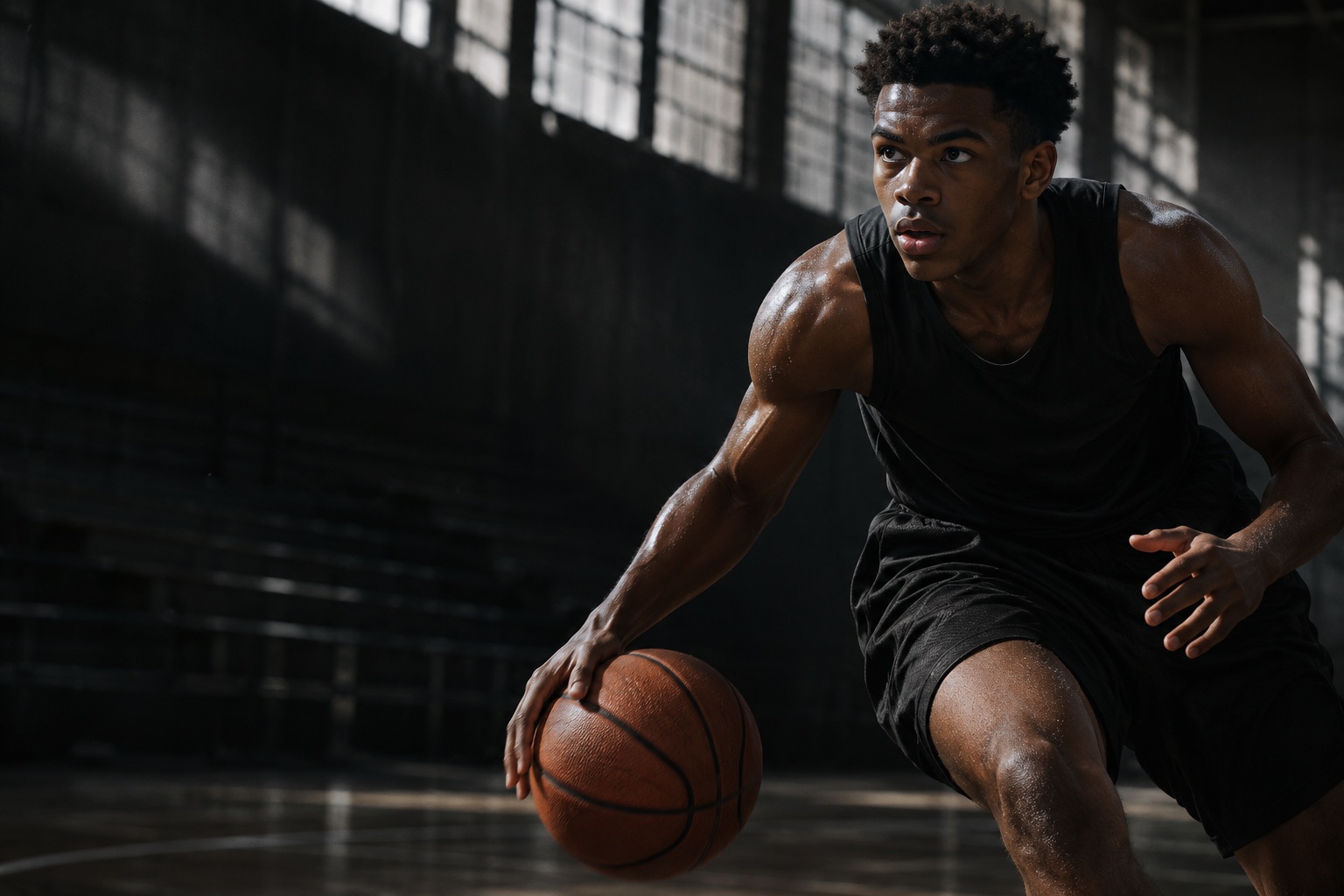
Learn to keep your eyes up in a crowd, or break down the read that creates your next shot. Pick the training that fits your game.
Find Your ProgramGroup games for players building control, confidence, and teamwork. $59 per player per session · 8–19 players.
Explore youth trainingIndividual training for athletes pursuing D1 or D2 play. Game film, shot creation, and recruiting support. Free first assessment, then $70/hour.
Explore college prepAlready 15? Choose Youth Fundamentals to practice the basics with teammates. Choose College Prep if you’re ready to study your game film and build an individual plan for college competition.
Your teammate cuts. A defender reaches. Can you see both and keep your dribble? That’s the kind of problem we’ll solve together. Bring a move you want to learn and a teammate’s name you want to remember.
$59 per player per session · Groups of 8–19
Ask Coach K.T. about youth trainingOpen a challenge. Try the starting rep, then add the defender or the decision.
Dribble in place while a partner points to one of two colored cones. Call the color before your next two bounces. Trade jobs after five calls.
Move between the cones. When your partner steps into one lane, change hands and take the other. Count the times you spotted the open lane before you turned.
Drive two dribbles toward a cone and jump-stop on two feet. Hold your balance long enough to show your teammate a pass fake.
Have your partner close off one side after you stop. Keep your pivot foot planted and turn until you can pass around their hands.
Set two cones a few feet apart. One teammate cuts, one defends, and you have the ball. Score when the cutter catches your pass through the gate on balance. Rotate roles each turn.
Let the defender guard either side. Try a fake, wait for your teammate to change speed, and pass into the space ahead of the cut. Ask the receiver which pass felt easiest to catch.
Start close enough to shoot comfortably. Pick a spot, set your feet, and hold your finish until the ball reaches the rim. Track clean makes from five tries.
Have a teammate pass from a new angle. Get your feet ready as the ball travels and try to match your streak. After a miss, choose one cue for the next shot.
We split the group into small stations, switch partners, then play short-sided games. In a 3-on-3 round, earn a bonus point when a teammate scores off a pass and cut. Everyone gets a turn creating the opening.
Your pass gets tipped. What can you do before the other team scores? Call out who has the ball, sprint back, and find a player to guard. When you come off, tell a teammate one thing you saw and one adjustment you’ll try. That’s a recovery you can practice.
Freeze the possession while the pass is in the air. Where is the closeout coming from? Who has the rim? From the same wing catch, those two answers can give you a drive, a skip pass, or a rhythm three.
Read the last two steps of the closeout. If the defender is still running and the baseline is clear, put the first bounce outside their high foot. Get your shoulder even with their hip. As soon as you gain that edge, find the low help defender before you pick up the ball.
Track the weak-side defender as the ball comes to you. If both feet sink into the lane and their eyes turn to the ball, the opposite wing can open. Check the flight path, then throw to the receiver’s shooting pocket while the defender still has to turn and recover.
If the defender settles inside the arc and you’re in range, prepare your feet while the pass travels. Meet the ball with your hips loaded. On film, watch for an extra dip or shuffle after the catch. That extra beat can let a short closeout reach your release.
On film, I stop the clip one beat before the gather. Find the defender who can still affect the shot. Then run it forward and see whether the footwork, spacing, or pass actually took that defender out of the play.
You’ve turned the corner from the wing. At the elbow, your defender is sprinting alongside you to recover at the rim. Their hips still point downhill. Check the nail, the middle of the free-throw line, for a second defender who could contest.
Keep your drive speed through the last live dribble. Lower your hips before the gather so your feet can brake underneath you. If the defender takes another step toward the rim, rise in that pocket. If they stop level with you and the lane stays open, carry the drive through.
Freeze at the gather, then advance to release. Did the defender’s momentum create a clean shooting window? Check where you landed relative to your takeoff.
On a baseline drive away from you, start in the weak-side corner. Watch your defender’s inside foot. If they step down toward the restricted area and their body blocks the corner passing lane, look for a window behind their high shoulder.
Lift toward the wing only far enough to give the driver a clear passing angle. Arrive with your hands ready and your feet organized as the pass reaches you. If the corner passing lane stays clear, holding your depth can give the driver the shorter pass.
Pause on the driver’s last live dribble. Trace a straight line from the ball to your hands. Does it clear the helper, and are you still spaced beyond the arc?
The screener is arriving on your left. Your defender slides above the screen early and puts their chest outside your left shoulder. Scan the right lane line. A low defender already sitting there can take away the reject.
Keep the dribble live and bring your eyes and left shoulder toward the screen. When the defender shifts, drive right with the first bounce beyond their hip. If the low defender stays home, gather for the layup. If they step across, find the teammate they left.
Stop on the first bounce away from the screen. Did you get shoulder-to-hip with the on-ball defender? Locate the low defender in that same frame and name the finish or pass you have.
After your wing-to-top pass, the defender gets above you to deny the return. Watch their weight move onto the foot nearest the passer. Before you cut, check whether a teammate or help defender already occupies the lane.
Step toward the return pass with your hands available. As the defender leans into the passing lane, push off that step and cut tight behind their high shoulder. Show a target ahead of your body so the passer can lead you into a finish without a recovery dribble.
Freeze as the pass leaves your teammate’s hands. Have your hips cleared the defender? Follow the catch. A ball delivered ahead preserves your stride. A ball behind you gives the defender a recovery step.
The poetry is in the timing. A half-step, a change of pace, a pass just as the help commits.
Winning in AAU basketball has shaped my eye for the details players often miss. I watch where your eyes go before a catch and which foot takes your weight when you stop. Then we work on that moment until you can feel the difference at game speed.
When we watch your film, you get the first word. What did you see? What shot were you trying to create?
Every player brings a different rhythm, role, and feel for the floor. My job is to bring a trained eye. You bring the view I can’t get from the sideline. We put those together and choose one part of your game you want to sharpen.
Say you feel most balanced stopping on two feet in the lane. We’ll start with that finish, put a live defender in front of you, and see which angles give you a clean release. You tell me what you felt. I’ll show you what I saw. Together we decide what to keep, what to adjust, and what to look for in your next game.
I pair my coaching eye with marketing and technical experience to build a player-specific outreach strategy for college coaches and scouts.
Select clips that reveal the read, the rotation, and the decision that helped your team.
Bring film, position, graduation year, and game schedule together so a coach can evaluate your fit.
Identify D1 and D2 programs that fit your game, personalize introductions, and track follow-ups.
Bring one possession you want to talk through and one skill you want to own. We’ll look at how you move, how you read the floor, and what you want from training.
Request a free assessmentIndividual training follows the assessment. Once we agree to work together, I’ll provide a full examination of your game and build a plan around your physical skills, decision-making, and recruiting goals.